
Through the Expert’s Eye, Esperanto Magazine


Originally published in Esperanto Magazine, The Candid Edition, Issue 1, 2026 (print)
Recently, I had the opportunity to interview Melbourne-based photographer Abigail Varney for the first 2026 edition of Esperanto, Monash University’s student arts and culture magazine. The issue, themed Candid, explored ideas surrounding authenticity, observation, and what it means to capture people honestly — concepts that immediately made me think of Varney’s photographic practice.
Just before the pitch list for the edition was released, I visited the exhibition Familial at Town Hall Gallery (Hawthorn Arts Centre), where I encountered Varney’s work. Her photographs stayed with me long after leaving the exhibition. There was something deeply attentive about the way she photographed people and environments — moments that felt intimate without becoming intrusive, humorous without feeling performative. When the Through the Expert’s Eye prompt appeared in the pitch list, asking contributors to interview a professional photographer about candid photography and the psychology of the camera, I immediately put my name down and emailed Abigail almost straight away.

The interview focused on candid photography: the relationship between photographer, subject, and camera, and the ways photographers navigate authenticity in an image-saturated world. Speaking with Abigail was incredibly insightful, particularly hearing her discuss documentary photography as a process of observation rather than control. She described candid photography as “trying to be unseen,” comparing the photographer to “a fly on the wall,” while also acknowledging the complexities of photographing people in an era where cameras are constantly present.
One of the most interesting aspects of our conversation was hearing about how differently people respond to being photographed. Abigail spoke about the importance of patience, trust, and sensitivity — describing the process of building comfort with subjects as a “slow burn.” Rather than forcing a moment, she allows interactions and environments to unfold naturally, embracing unpredictability instead of resisting it. As she reflected during the interview, “nothing is in your control… that’s where the magic happens.”
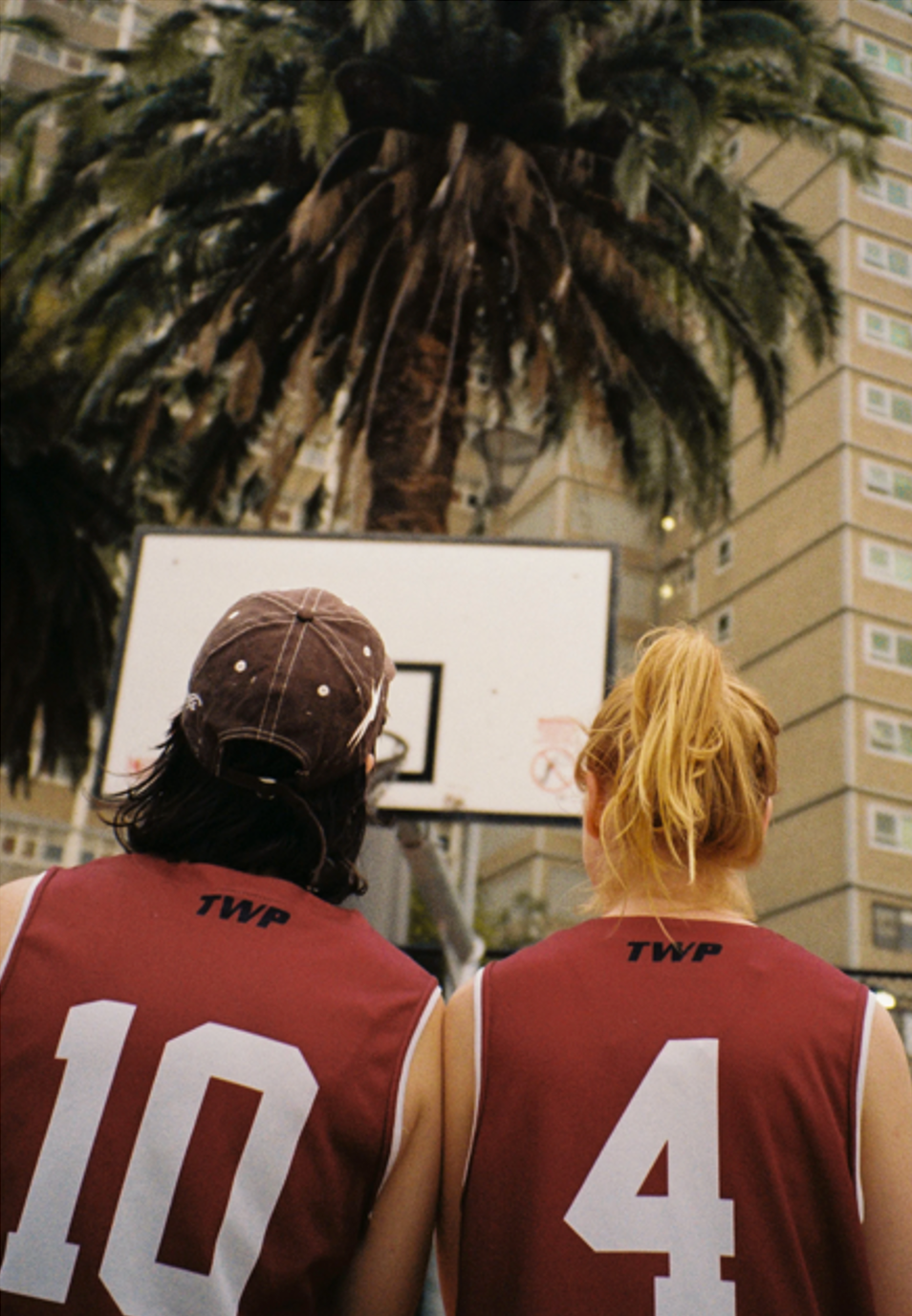
We also discussed projects including The Dirty Bloomers, her ongoing series photographing her beloved basketball team, and her vibrant photographs from the Parkes Elvis Festival commissioned by The New York Times. Throughout the conversation, what became clear was her deep interest in communities, humour, and the subtle dynamics between people. Her photographs often capture fleeting gestures, interactions, and moments of absurdity that reveal something deeply human.
Another particularly moving part of the interview was hearing about the influence of her father’s photography. Abigail described growing up around photographs documenting everyday life, relationships, and moments of humour — images that shaped her understanding of photography as observation rather than performance. That sense of intimacy and attentiveness continues throughout her work today.
I’m incredibly grateful to Abigail for being so generous with her time, insight, and photographs throughout this process. Conducting this interview reminded me how valuable conversations with artists can be — not only for understanding creative practice, but for reconsidering the ways we look at people, environments, and everyday moments ourselves.
The full article can be read below:
In an image-saturated world where a camera is almost always anticipated, the idea of a “candid” moment feels increasingly complex. For Melbourne-based photographer Abigail Varney, candid photography is not simply about spontaneity — it is about navigating presence, distance, and the delicate psychology between photographer and subject.
Varney’s connection to candid photography is deeply personal, shaped by her father’s photographs. His work — featuring fragments of everyday life, relationships, and quiet humour — offers an early understanding of photography not as performance, but as observation.

Varney’s practice sits between documentary and portraiture. There is a consistent attentiveness to human behaviour and communities: gestures, glances, and interactions that feel unguarded, even when the camera is not entirely invisible.
“The whole part of candid photography is basically trying to be unseen,” she explains. “You’re like a fly on the wall.” In these moments, the photographer recedes, allowing scenes to unfold without direct intervention. Yet this distance is not always fixed. Varney describes how her position shifts depending on whether she is an outsider entering a community or an insider photographing people she already knows. In The Dirty Bloomers, Varney photographs her beloved basketball team; familiarity alters the dynamic — subjects may look back at the camera, acknowledging her presence, but without the stiffness of posed portraiture.
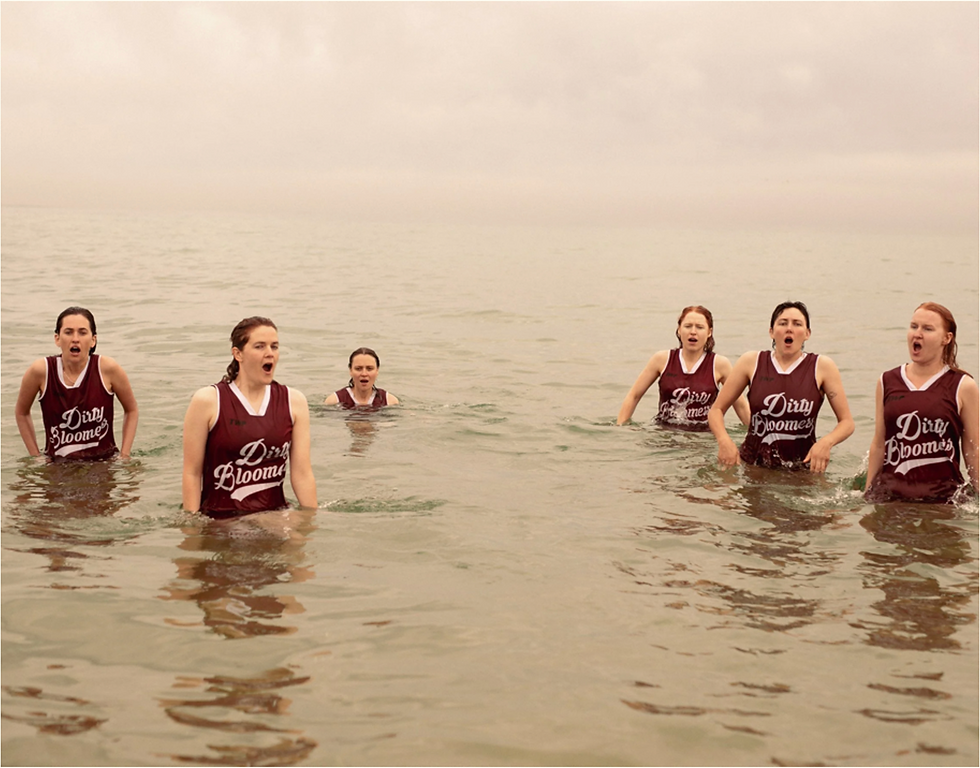
This tension between visibility and invisibility sits at the core of candid photography. While the aim may be to capture authenticity, the presence of the camera inevitably shapes behaviour. “People want to be perceived in a certain way,” Varney notes. Rather than resisting this, her approach is grounded in patience and sensitivity. Building trust is a “slow burn”: introducing herself, stating her intentions, and gradually allowing subjects to relax into the moment. Over time, guarded performances soften, and something more
instinctive begins to surface.

Unlike studio-based portraiture, where lighting, composition, and interaction are carefully controlled, candid photography operates within unpredictability. “Nothing is in your control…you just have to go with it.” Yet it is precisely within this lack of control that something unexpected can emerge, Varney reflects, as “that’s where the magic happens.”
For Varney, candid photography reveals a sense of people as they exist within their own rhythms. “They’re doing something — they’re not posing for you… it’s like a 3D live mode,” she explains. In contrast, portraiture can sometimes produce what she describes as a “fake bond,” a constructed intimacy between photographer and subject that feels fundamentally different from the unscripted interactions of everyday life.
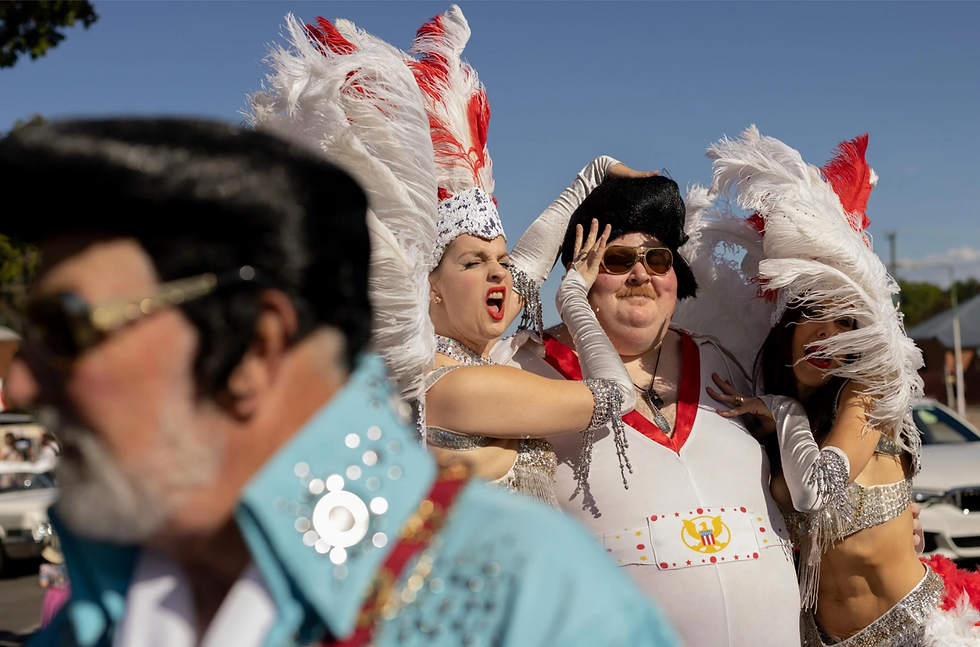
Her photographs frequently capture moments of humour and subtle absurdity, particularly within communal settings. In her ‘Parkes Elvis Festival’ series, commissioned by ‘The New York Times’, she recalls an image of two figures in earnest conversation, dressed as Elvis Presley. Framed by out-of-focus impersonators in the foreground, the composition gently obscures and reveals, heightening the scene’s character and
ambiguity.
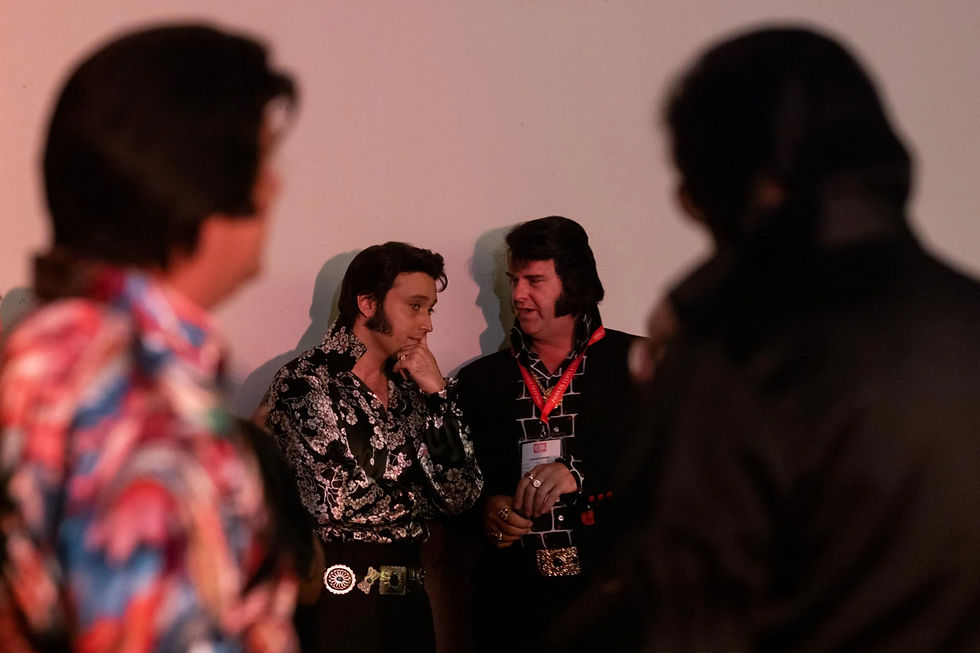
In large, celebratory environments like festivals, subjects often welcome the camera, performing for it rather than retreating from it. In smaller or more intimate settings, however, trust becomes essential. Varney adapts to each situation intuitively, emphasising that there is “no real framework” for working with people — only a responsiveness to the energy of each encounter.
Ultimately, candid photography resists a singular definition. It exists somewhere between observation and participation, control and surrender. For Varney, its power lies in its openness: an ability to hold contradiction, to capture both the performed and the unguarded at once. In relinquishing control, the photograph recognises a moment — fleeting, imperfect, and, perhaps because of that, real.


Comments